Petrol Is Going to Go Up — What the National Fuel Security Plan Means for Drivers
If you have filled up recently, you already know the direction of travel: petrol is going to go up again for many Australian drivers. Wholesale costs remain elevated, excise relief is tapering, and Melbourne’s retail cycle can stack a sharp reset on top of global supply pressure.
That does not mean panic at the bowser. It does mean understanding why prices are moving — and what governments are doing behind the scenes to keep fuel available while those higher costs pass through.
> This article explains national supply coordination and price drivers. For exact board prices today, use the station directory and live fuel map.
Why petrol is going up again
Several forces are pushing in the same direction:
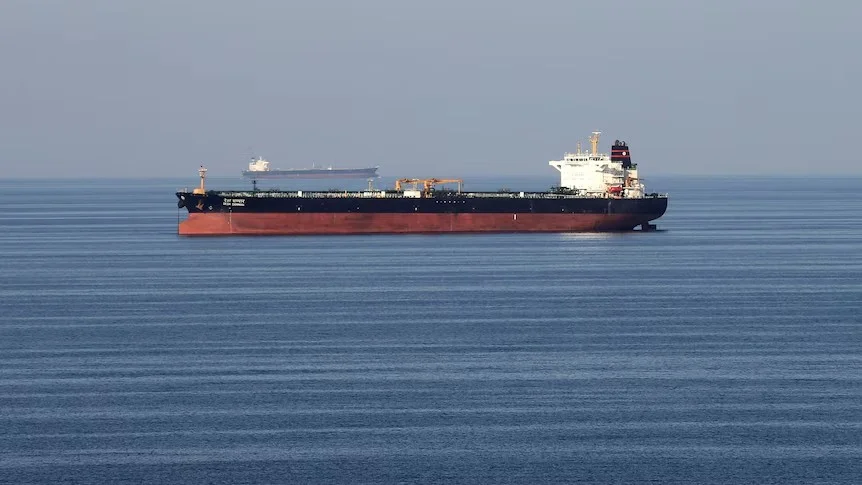
1. Global supply disruption — conflict in the Middle East has strained shipping routes and refined product flows that feed Asian hubs supplying Australia. See Middle East war and Australian petrol prices.
2. Wholesale pass-through — when Singapore Mogas benchmarks rise, Australian terminal gate prices follow within one to two weeks.
3. Excise settings — the full 50% excise cut ended 30 June 2026; a reduced 25% cut applies until 2 August, then the full rate returns unless extended. That alone can add around 16¢/L compared with June relief. Read petrol excise cut extension.
4. Melbourne’s retail cycle — even when wholesale is flat, coordinated retailer resets can lift metro prices 8–15¢/L in days. Background: fuel price cycles.
None of these guarantees your local servo moves today — but together they explain why “petrol going up” is the sensible baseline assumption for mid-2026.
National Fuel Security Plan
All governments are working together to support Australians through the global fuel supply disruption. The National Fuel Security Plan sets out a coordinated government response across the Commonwealth, states and territories.
Endorsed by National Cabinet, the plan is designed to:
- Keep the community and business updated on fuel supply conditions
- Coordinate consistent action across jurisdictions instead of fragmented state-by-state responses
- Stage stronger measures only when voluntary action and industry coordination are not enough
- Protect diesel availability for freight, agriculture, and essential services that keep the economy moving
The plan does not set bowser prices — retailers still compete locally — but it shapes whether supply remains orderly during a global shock. When supply is orderly, price rises tend to reflect wholesale and tax changes rather than scarcity premiums.
Official background: National Fuel Security Plan (PM&C) · Department of Infrastructure
Four levels of government response
The National Fuel Security Plan uses four staged levels, from preparation through to protecting critical users:
| Level | Label | What it means |
| --- | --- | --- |
| 1 | Plan and prepare | Monitoring, contingency planning, industry coordination |
| 2 | Keeping Australia moving | Supply continues with pressure; governments and industry act together (current level) |
| 3 | Taking targeted action | Focus fuel where it is needed most; stronger voluntary conservation measures |
| 4 | Protecting critical services | Government action to protect emergency, health, utilities, and freight users |
Australia is currently operating at Level 2 — “Keeping Australia moving.” Fuel remains available and supply chains are functioning, but the system is under pressure from global disruption and strong domestic demand.Level 2 is not an “all clear.” It is an active management setting: securing imports, adjusting standards where safe to release extra volume, and asking households to avoid behaviour that strains local networks.
What Level 2 means for drivers
At Level 2 you should expect:
- Fuel on the forecourt — major supply routes and port arrivals continue, though individual sites can run low temporarily after demand spikes
- Higher prices — global disruption and policy changes pass through to wholesale and retail; the plan stabilises *availability*, not *affordability*
- Public messaging — campaigns such as “Every Little Bit Helps” encourage practical steps (no panic-buying, combine trips, fill only what you need)
- No blanket rationing — stronger Level 3 or 4 measures are reserved for sustained disruption
If you drive in Melbourne, Level 2 does not suspend the local price cycle. You can still save material money by comparing suburbs and timing fills away from peak phase — see cheapest day to buy petrol in Melbourne.
Supply measures already in play
Under the National Fuel Security Plan and related budget measures, governments have already deployed tools intended to add volume and smooth imports, including:
- Temporary fuel quality adjustments — allowing specified higher-sulphur petrol and adjusted diesel flashpoint standards to release additional domestic and import-compatible supply (short-term, standards-aligned measures)
- Securing additional cargoes — working with trading partners and export finance tools to underwrite critical fuel shipments
- Stockholding and reserves — expanding minimum stock obligations and establishing a government-controlled fuel security reserve for diesel and jet fuel buffers
- Fuel Security Taskforce coordination — centralising industry and government response during Middle East-related supply chain stress
These measures aim to prevent Level 3 escalation — but they do not eliminate wholesale price pressure when global benchmarks are high.
For stockholding context on this site, see fuel security days of cover and supply pressure index.
Melbourne cycle and wholesale pressure
National supply coordination and Melbourne retail strategy operate on different clocks.
Wholesale moves can take days to two weeks to reach terminal gate prices. Melbourne’s cycle can then amplify that move when majors reset — which is why some drivers see a double-digit jump in a single week even when headlines focus on national policy.
Compare corridors before you assume your suburb matches the metro average:
Diesel drivers should track gasoil-driven moves separately — why is diesel expensive · Sunbury diesel.
What drivers should do now
Practical steps that align with the National Fuel Security Plan’s voluntary message and protect your wallet:
1. Do not panic-buy — topping up multiple vehicles or jerry cans can create the local shortages governments are trying to avoid.
2. Compare before you drive — use the directory and map; spreads of 5–15¢/L are common in Melbourne on the same day.
3. Time unleaded fills around the cycle — if prices just spiked across majors, waiting for the discount phase often beats filling at the peak.
4. Watch the excise calendar — July–August 2026 still involves stepping down from full relief; plan larger fills before known policy transitions if your tank is low.
5. Track national context, act locally — read national explainers for supply confidence, but make purchase decisions from live suburb boards.
Petrol is going to go up for many drivers in the weeks ahead. The National Fuel Security Plan is the government’s staged answer to keeping Australia moving while that happens — coordinated, transparent, and designed to escalate only if conditions worsen. Your best defence at the bowser remains the same: compare live prices and avoid buying at the wrong point in the cycle.
Related: Why are petrol prices rising? · Petrol excise cut extension · Middle East war and petrol prices · Melbourne petrol rose 15 cents this week