
Petrol Excise Cut Extended — But Only at Half the Rate From July 1
Australian drivers will keep some bowser relief beyond June 30, but only a reduced version. Prime Minister Anthony Albanese announced over the weekend that the government would extend Australia's petrol excise relief measures past their original expiry date — calling it "the sensible thing to do" — but at half the current rate.
Here is what that means for your wallet.
What was announced
When the federal government cut the fuel excise by 50 per cent on April 1, 2026, motorists saved 32 cents per litre at every fill. That cut was due to expire on June 30.
Instead of a full restoration, the government will maintain a 25 per cent cut — saving 16 cents per litre — from July 1 until August 2, 2026. After that, the excise returns to its full rate unless a further extension is announced.
Finance Minister Katy Gallagher acknowledged the pressure on households: "We know that the cut to the petrol excise has really helped households, whilst the war in the Middle East has impacted on petrol prices here."
How the numbers work
| Period | Excise cut | Saving at the bowser |
| --- | --- | --- |
| April 1 – June 30, 2026 | 50% | ~32¢/L |
| July 1 – August 2, 2026 | 25% | ~16¢/L |
| From August 3, 2026 | 0% | 0¢/L |
The difference between April's relief and July's arrangement is 16¢/L. Across a typical 50-litre tank, that is around $8 more per fill from July 1. For an 80-litre tank, the additional cost is closer to $13.
When will prices rise at the bowser?
The excise applies to petrol purchased at the wholesale level. Most retailers carry several weeks of stock, so the price change does not always land at the pump on the exact day the excise shifts. Drivers should expect a gradual rise through the first two weeks of July rather than a single overnight jump.
That said, Melbourne's retail price cycle can amplify the change. If the cycle happens to peak in early July — as the excise partial restoration flows through — the combined effect on prices could feel more pronounced.
With average regular unleaded sitting around $1.65 per litre in June, prices are expected to move toward $1.80 per litre once the halved relief applies.
Diesel outlook
Diesel drivers face a similar calculation. With national diesel averages hovering around $1.97 per litre in June, the partial restoration of excise could push pump prices above $2.10 per litre from July.
Unlike unleaded, diesel does not follow capital-city retail cycles — it tracks international gasoil benchmarks more closely. Compare live diesel listings along your route rather than relying on cycle timing.
Will cheaper global oil cushion the blow?
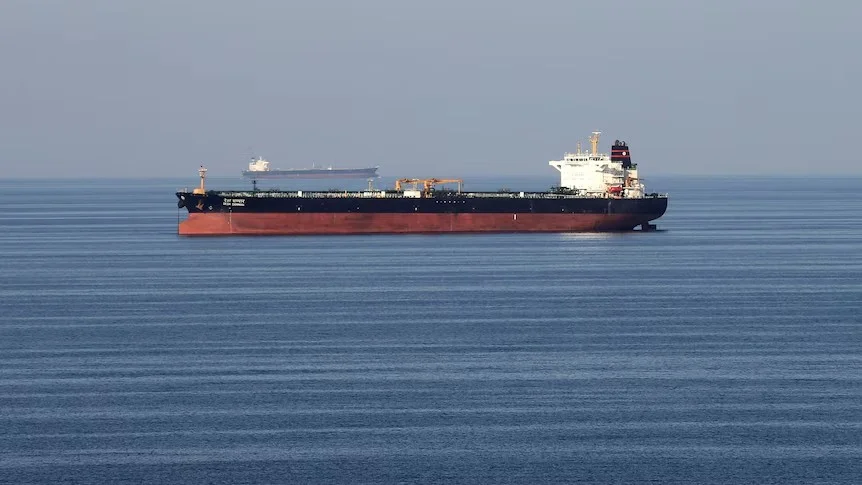
There is reason for cautious optimism. When the US and Iran signed a memorandum of understanding last week relating to the Strait of Hormuz, it raised hopes that the major shipping route could reopen — which would ease global oil supply constraints.
International benchmarks have already responded: gasoil (the key diesel indicator) has fallen roughly 17 per cent from 2026 highs, while tapis (a petrol bellwether for Australian imports) is down around 13 per cent.
NRMA spokesman Peter Khoury noted that those falls could partially absorb the excise restoration: "The hope is if the peace deal holds and the strait opens we will see further falls. That means some of the increase will be offset by the falls in petrol prices."
Whether the peace holds is uncertain. The US and Iran have already exchanged conflicting public statements about when or if the strait would reopen — so drivers should not bank on further relief from that direction.
What drivers should do now
- Fill before July 1 if your tank is low — you will still benefit from the full 32¢/L relief.
- Compare stations using live listings — the cheapest servo in your suburb may offset a portion of the excise restoration.
- Watch cycle timing — if Melbourne is approaching a cycle peak in early July, consider topping up during the trough before the peak hits.
- Diesel drivers: compare corridor prices on the map; there is no optimal cycle window, so comparison shopping matters more than timing.
Related: Why did fuel jump overnight? · Why are petrol prices rising in Australia? · Israel–Iran tensions and oil prices · Melbourne fuel cycle forecast